
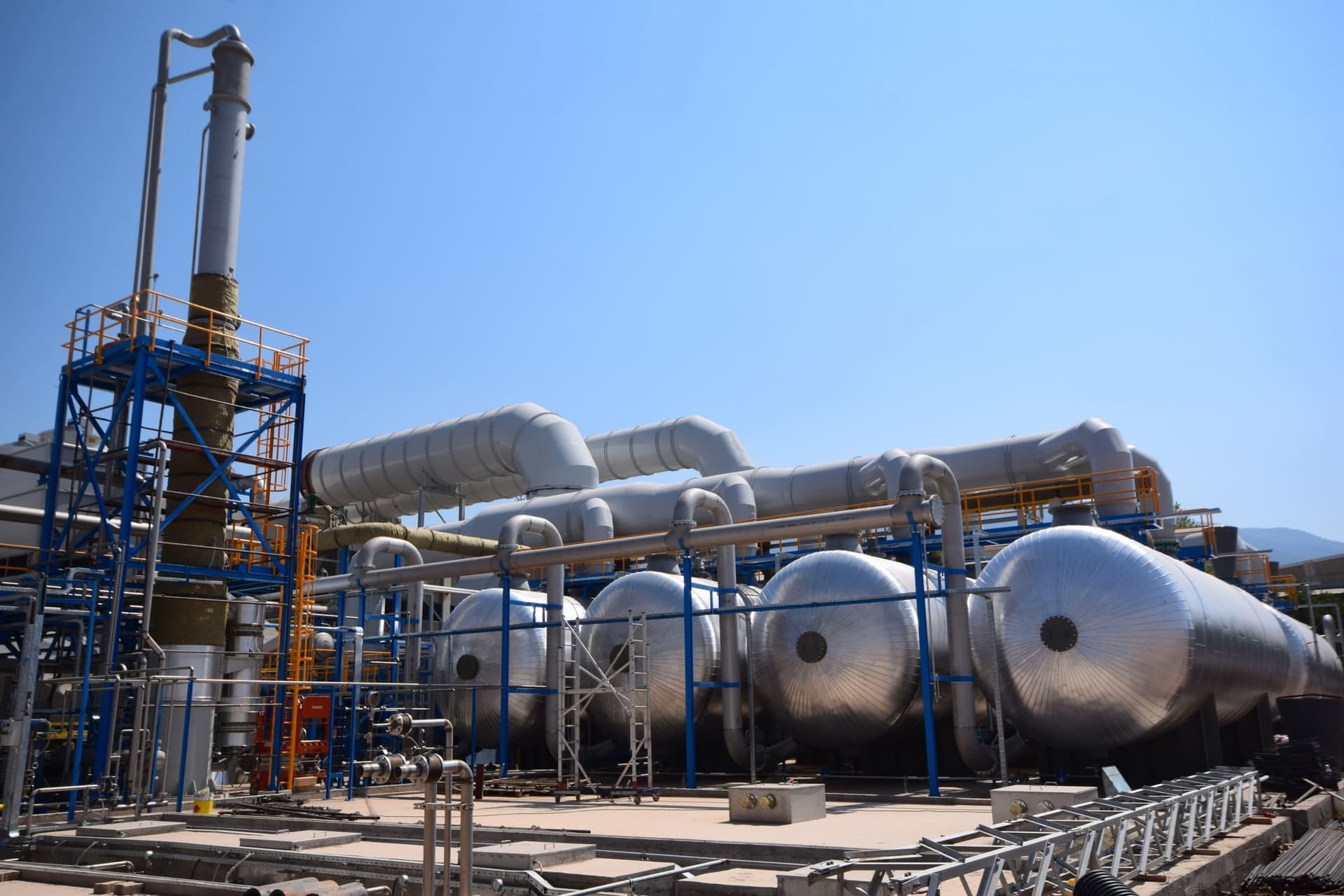
Site photo · adsorber tanks and distillation column
Process engineering · İzmir Kemalpaşa, Türkiye
V.O.C. Solvent Recovery Plants and Process Engineering
Yeşil Çevre Makine is an İzmir-based process engineering company that designs, manufactures and installs turnkey V.O.C. solvent recovery plants, which capture the solvent leaving production lines by activated-carbon adsorption and return it as liquid. For flexible packaging, printing, adhesive tape and coating manufacturers it lowers emissions and puts the solvent back into production.
Yeşil Çevre Makine in figures
30+yearsYears in the sector
250+Completed projects
38Corporate references
30peopleSpecialist staff
What we do
The plants we build capture the solvent leaving the drying oven before it reaches the stack, recover it as liquid, purify it and return it to the production line. We design, manufacture and commission these plants ourselves, in Kemalpaşa, İzmir.
Yeşil Çevre Makine · Kemalpaşa / İzmir
Solutions
Six product groups for the solvent’s whole journey
From the recovery plant to storage, from distillation to the heat centre, we design and build all of the equipment in-house.
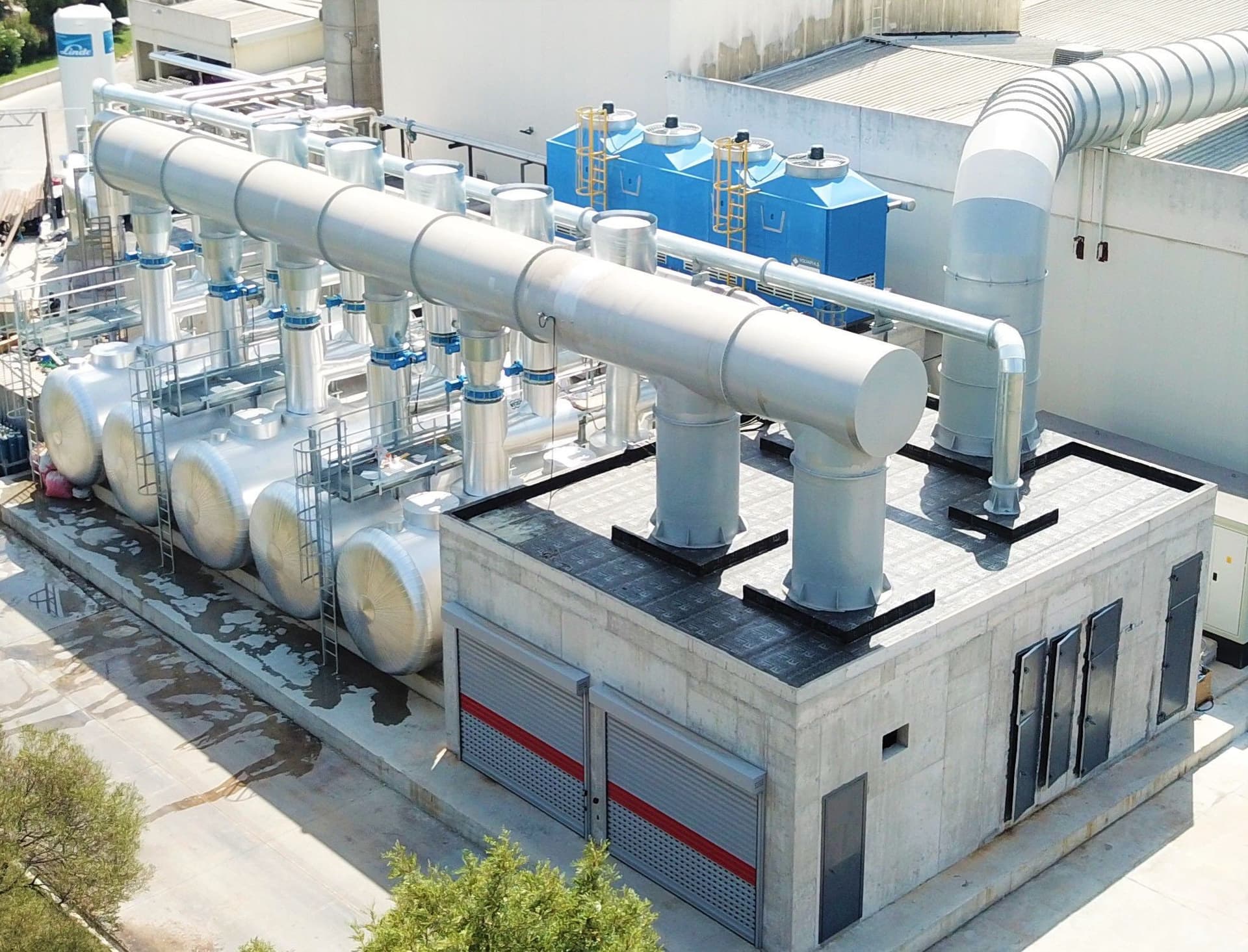 Main product
V.O.C. solvent recovery plant
Turnkey plants that capture the solvent in drying-oven exhaust on activated carbon and return it as liquid solvent.
View →Solvent distillation unit
Batch and continuous distillation units that purify contaminated or mixed solvent under vacuum.
View →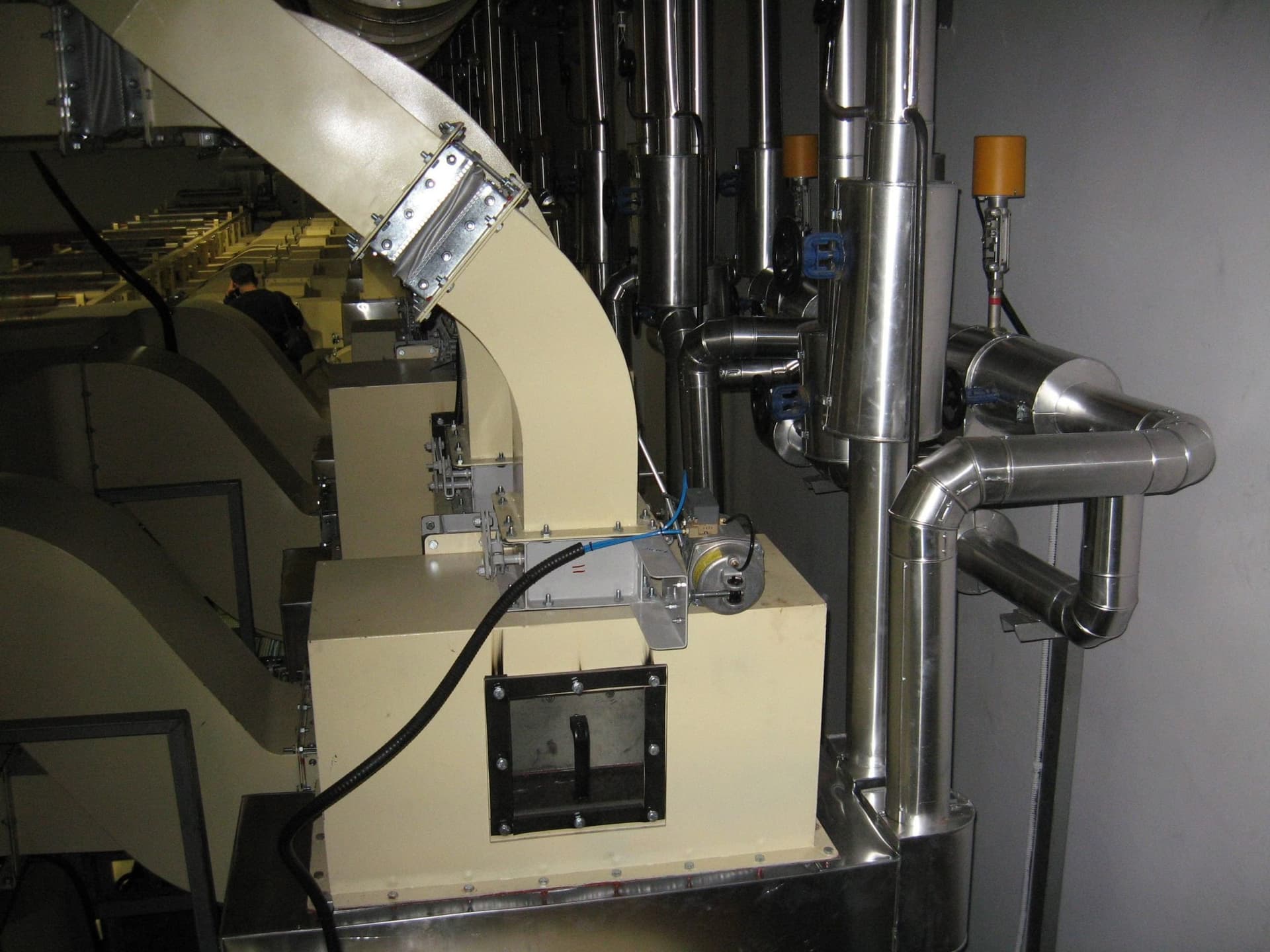
L.E.L. control unit
A control system that continuously measures solvent concentration in dryers and ducts and safely lowers the exhaust flow.
View →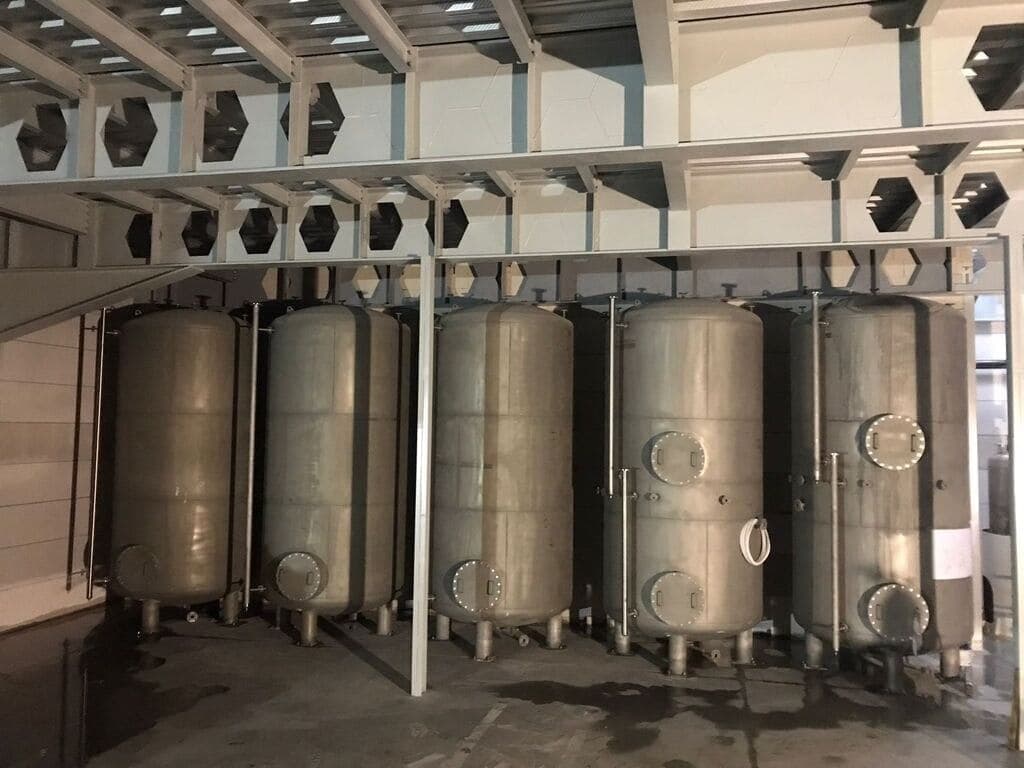
Nitrogen-blanketed solvent storage
Systems that keep flammable solvent in fully closed, nitrogen-blanketed tanks, installed together with filling, transfer and measurement equipment.
View →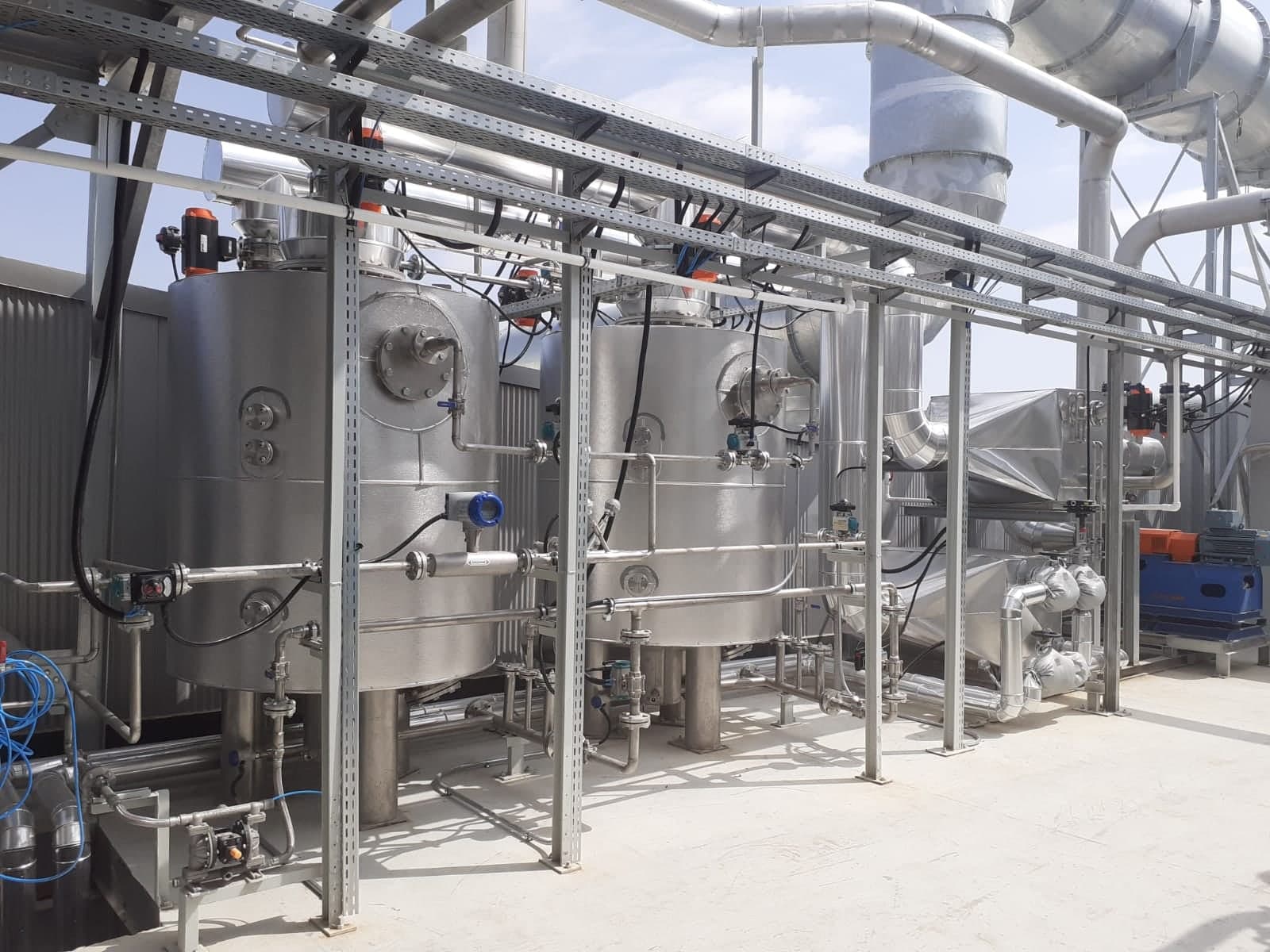
Molecular sieve systems
Units that hold the water in recovered ethyl acetate and alcohols on zeolite beds and deliver print-grade dry solvent.
View →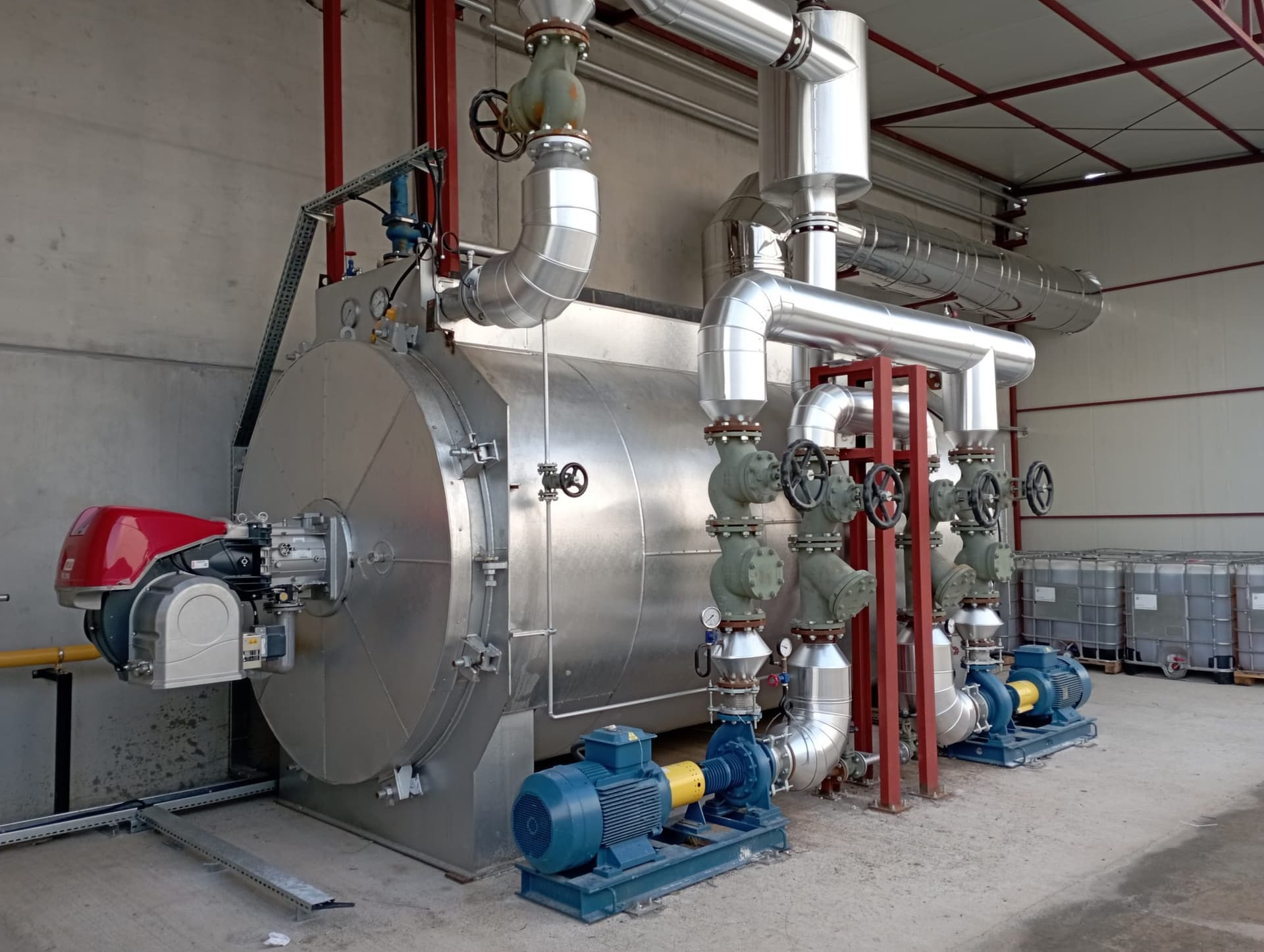
Thermal oil heater and heat transfer systems
Thermal oil heaters in 13 standard capacities from 660 kW to 5,814 kW, and turnkey heat transfer circuits.
View →
Loss and recovery
The same solvent, two different endings
Solvent leaving the drying oven is either sent up the stack or comes back as product. What makes the difference is the recovery plant.
| Criterion | AWhen the solvent is vented or incinerated | BWhen the solvent is recovered |
|---|---|---|
| Solvent | Evaporates in the dryer and is carried out with the exhaust air. | Captured on an activated-carbon bed and recovered as liquid by thermal regeneration. |
| Raw material | The same solvent is bought again. | Every kilogram recovered is a kilogram of raw material not purchased. |
| Emissions | Without abatement it is a direct volatile organic compound emission, limited by the air emission permit. | The stack load drops. The design target is set in the project according to the limit value in your environmental permit. |
| Energy | Thermal oxidation removes the emission but destroys the solvent and may need auxiliary fuel. | Heat is needed for regeneration and cooling for condensation; the demand is calculated during the survey. |
| When is it right? | When the solvent has little value or separating the mixture is uneconomic. | When the solvent is valuable and the line produces solvent-laden air continuously. |
On choosing the method: What is solvent recovery, and which method fits when?
Closed loop
Six products, one solvent loop
Each product can be installed on its own. In most projects they are designed as one connected system: the solvent is stored, used, captured, purified and returned to the store.
- Storagenitrogen-blanketed tank
- Production lineprinting, coating
- DryerL.E.L. control
- Recoveryactivated carbon
- Distillationseparation
- Molecular sievewater removal
The loop closes: solvent from the last step returns to the first.
Field evidence
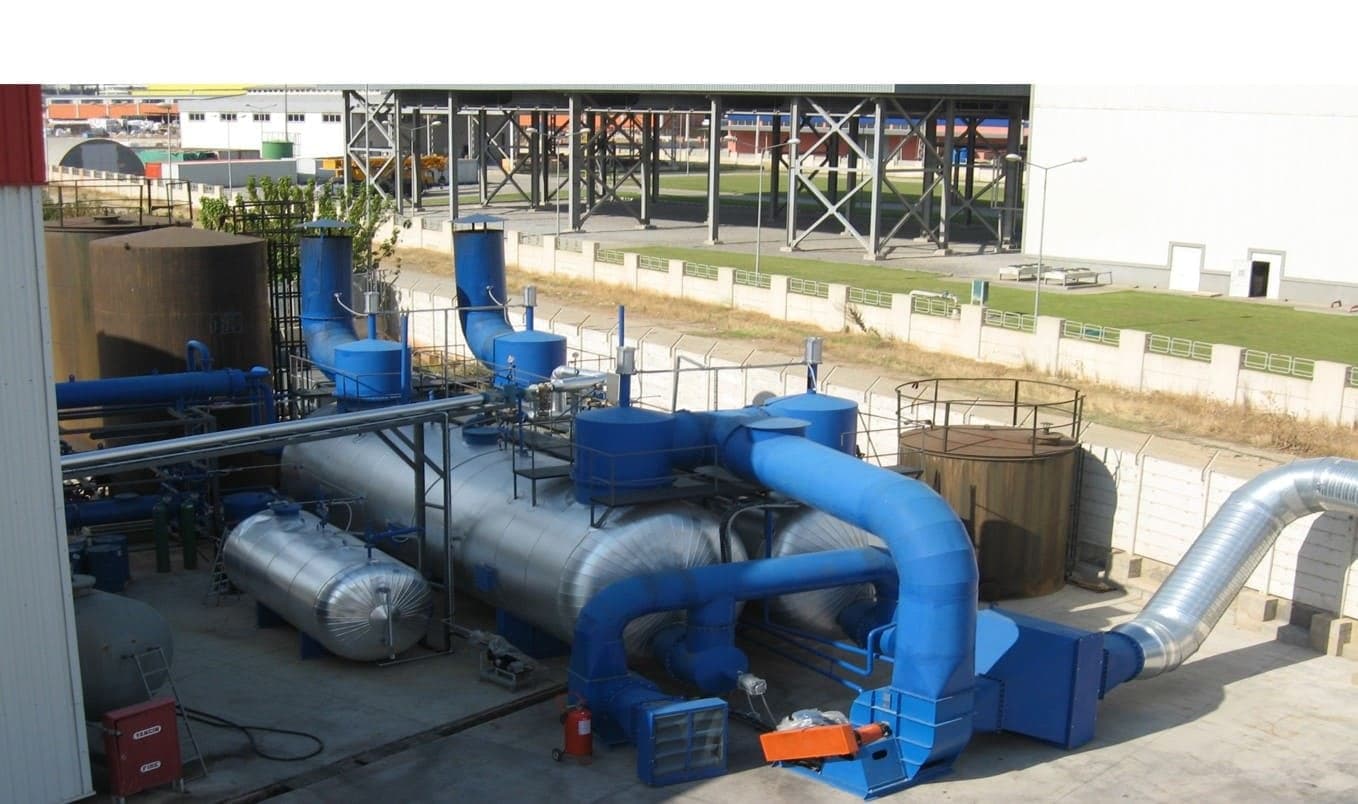
Toluene and hexane recovery on an adhesive tape line
Toluene and hexane do not mix with water; after regeneration they separate in the decanter. The method is explained in the toluene recovery guide. Measurement and capacity data for this project have not been published yet; the page shows only verified information and site photographs.
- Company
- VE-GE Bant
- Sector
- Adhesive tape
- Solvent
- Toluene, Hexane
- System
- V.O.C. solvent recovery plant
Other projectsVE-GE Bant – Hexane Recovery PlantVE-GE Bant – Toluene Recovery PlantAtak Ambalaj – Karaman Solvent Recovery Plant
Sector and solvent
Which solvent, which system, in your sector?
Each row is a typical starting point. The final system is decided after on-site measurement and solvent analysis.
| Sector | Typical solvent | Process problem | Recommended system | Related guide |
|---|---|---|---|---|
| Flexible packaging, rotogravure and flexo printing | Ethyl acetate, ethanol, isopropyl alcohol | The solvent arrives as a mixture and is water-miscible; it cannot go back to printing without purification. | Ethyl acetate recovery guide | |
| Adhesive tape manufacturing | Toluene, hexane | Almost all of the solvent on the coating line evaporates in the oven; the lower explosive limit is low. | Toluene recovery guide | |
| Film, foil and paper coating | Toluene, MEK, ethyl acetate | Air flow and solvent load change with the product; the lines need a lot of heat. | Method selection guide | |
| Synthetic leather, rubber and bitumen coating | Process-specific | Pre-separation may be needed depending on the mixture. | Method selection guide | |
| Chemicals and pharmaceuticals | Process-specific | In reactor and dryer vents the purity requirement drives the distillation design. | Method selection guide | |
| Electronics and battery manufacturing | Process-specific | Solvents used in coating and drying steps have to be captured. | Method selection guide |
How we work
Five steps from survey to maintenance
Plant survey
We inspect your line on site and measure exhaust flows and solvent consumption.
Design
Our own engineers design standard or custom systems around your operation.
Manufacturing
Tanks, adsorbers, columns and automation panels are built at our facility in Kemalpaşa.
Commissioning
We install on site, tune the plant under real load and hand it over running. We train your operators.
Maintenance
After handover we stay with you for maintenance, spare parts and technical support.
Manufacturing and engineering
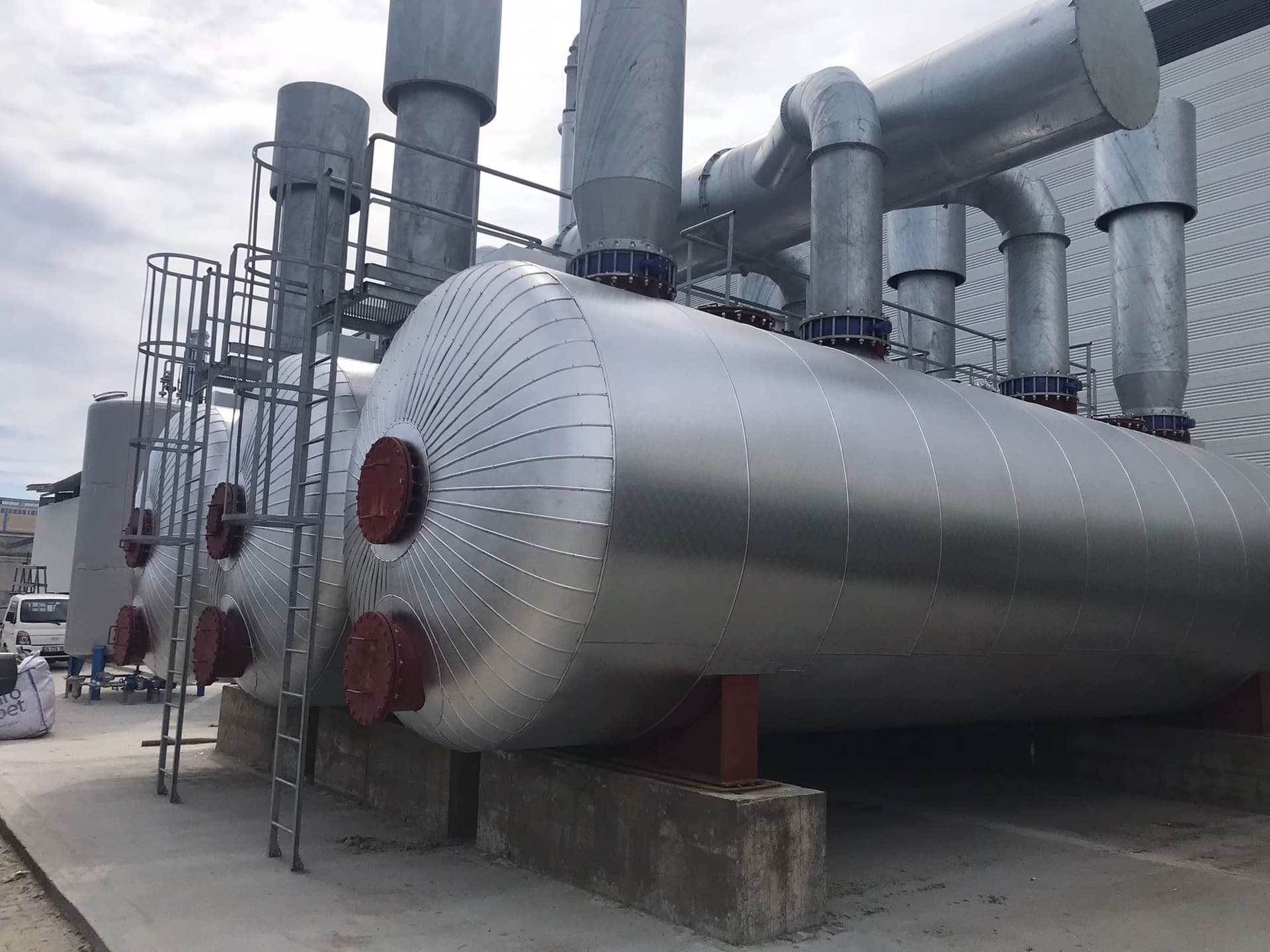
Design, manufacturing and commissioning under one roof
Plant survey, design, manufacturing, commissioning and maintenance are all carried out by our own engineers and technicians. The control system, including the PLC and automation software, is prepared in-house[C-01].
For a V.O.C. solvent recovery plant the measurements, process design, manufacturing and commissioning stay within one company; responsibility is not split between contractors.
- Adsorbers and tanks
- Distillation columns
- Process piping
- Automation panels
- PLC and operator interface software
- Site installation and commissioning
Technical guides
Read before you decide
All guides- · 8 min
Ethyl Acetate Recovery in Flexible Packaging and Printing
Why recovering water-miscible solvents takes more steps, and how print-grade anhydrous solvent is obtained.
Read the guide → - · 8 min
Toluene Recovery: Reusing Solvent in Adhesive Tape Production
Capturing toluene and hexane on activated carbon, separating them in a decanter and reusing them on solvent-based adhesive coating lines.
Read the guide → - · 9 min
What Is Solvent Recovery? Methods and Choosing the Right System
A decision guide on where solvent is lost in a plant, which method can recover it and how the right system is chosen.
Read the guide →
Frequently asked questions
Frequently asked questions
What does Yeşil Çevre Makine manufacture?
Yeşil Çevre Makine manufactures and installs turnkey activated-carbon V.O.C. solvent recovery plants, solvent distillation units, L.E.L. control units, nitrogen-blanketed solvent storage systems, zeolite-bed molecular sieve systems, and thermal oil heaters with heat transfer systems.
Which operations is a solvent recovery plant suitable for?
A solvent recovery plant suits operations that produce solvent-laden air continuously and use valuable solvents: flexible packaging, rotogravure and flexo printing, adhesive tape, film, foil and paper coating, and synthetic leather, among others.
Where is Yeşil Çevre Makine located?
Yeşil Çevre Makine manufactures at its facility at Mustafa Kemal Atatürk Mahallesi, Zincirlikuyu Sokak No: 7, Ulucak, Kemalpaşa, İzmir, Türkiye, and serves its customers on a project basis.
How does the project process work?
The process starts with an on-site survey and measurements. Then the process design and proposal are prepared, the equipment is manufactured at our factory, installed and commissioned on site, operators are trained, and maintenance and repair support continues afterwards.
Request a site survey and pre-feasibility for your line
Tell us the solvent, the approximate consumption and the line. Our engineers call you to clarify the need and, where useful, plan on-site measurements.
What we ask for
- Solvent type
- Consumption or air flow
- Sector and line type
- Project stage
To reach us directly: +90 506 839 88 57 · info@yesilcevmak.com