
Technical guides
Toluene Recovery: Reusing Solvent in Adhesive Tape Production
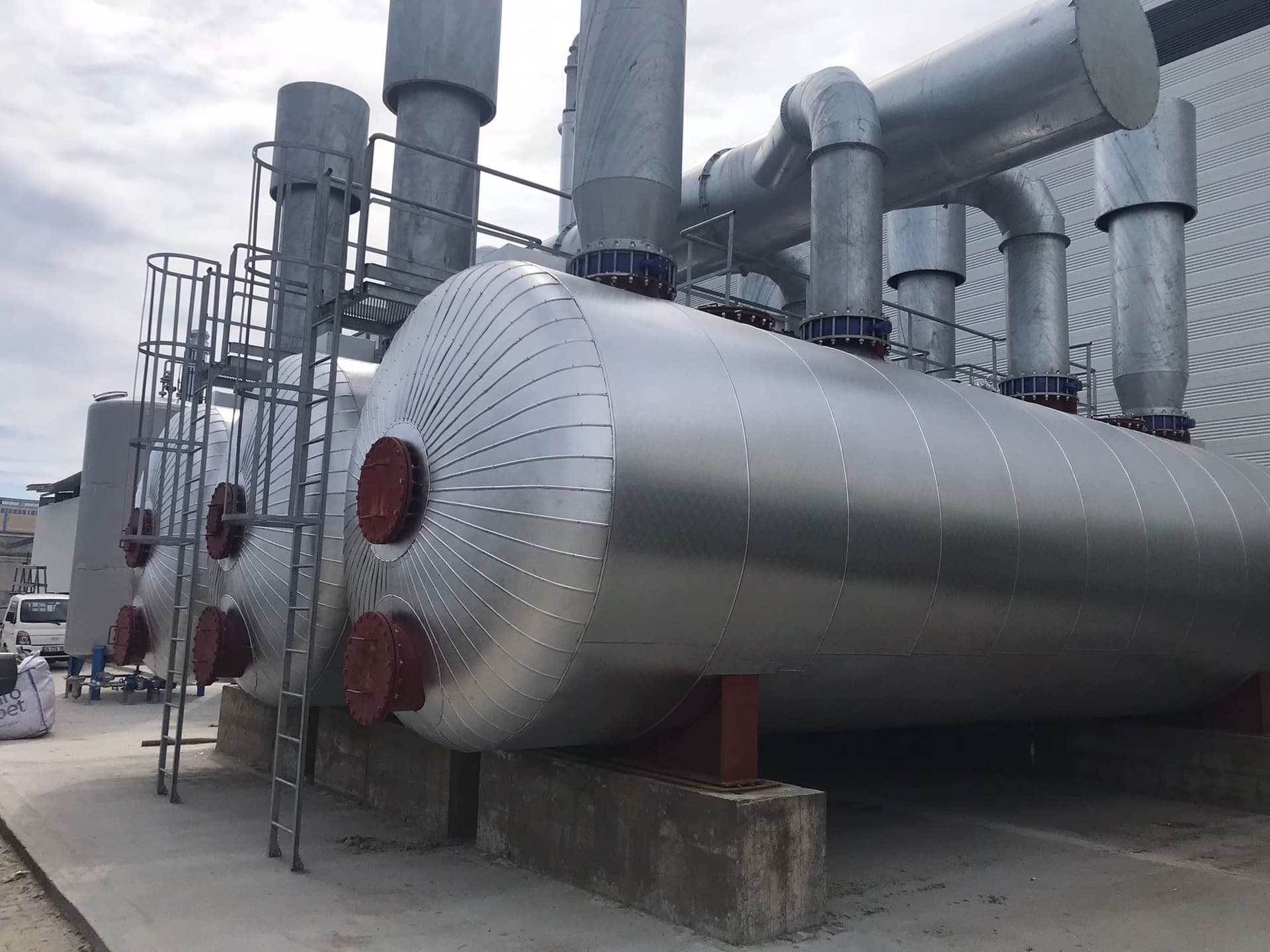
Toluene recovery, in adhesive tape production, is the capture of the toluene that evaporates in the coating line’s drying oven on activated carbon, its recovery as a liquid and its reuse in adhesive preparation. Because toluene does not mix with water, it separates from water by itself in a decanter after regeneration. This makes a toluene recovery line simpler than one for water-miscible solvents.
Context
Why is solvent so decisive in tape production?
Solvent-based adhesives are prepared by dissolving rubber and resin in toluene or hexane. After the adhesive is coated onto the carrier film, all of the solvent is evaporated in the drying oven; only the adhesive layer remains.
This means that almost none of the solvent entering the line stays in the product; it is carried out with the exhaust air. Without recovery this is a raw-material loss repeated every shift and a high volatile organic compound emission.
Because the coating line runs continuously and the exhaust contains one or two solvent components, adhesive tape production is one of the most suitable applications for recovery by activated carbon adsorption.
Solvent data
Toluene and n-hexane: the properties that shape the design
- Toluene, boiling point
- 111 °C[D-01]
- Toluene, solubility in water
- 0.07% (practically immiscible)[D-01]
- Toluene, explosive limits
- 1.1 – 7.1% by volume; flash point 4 °C[D-01]
- n-Hexane, boiling point
- 69 °C[D-03]
- n-Hexane, solubility in water
- 0.002% (practically immiscible)[D-03]
- n-Hexane, explosive limits
- 1.1 – 7.5% by volume; flash point −22 °C[D-03]
Both solvents are immiscible with water and lighter than water. The difference between their boiling points makes it possible to separate them by distillation when they are recovered as a mixture.
Process flow
The toluene recovery line
- Coating oven exhausttoluene-laden air
- Filtration and cooling
- Activated carbon adsorbersclean air to stack
- Regeneration and condenser
- Decantertoluene on top, water below
- Storage and adhesive preparation
Step by step
How does the line work?
Collection
The toluene-laden air from the drying oven exhaust is taken into the plant, filtered and cooled. Cooling increases the carbon’s capacity.
Adsorption
The air passes through the activated carbon bed adsorbers. Toluene is held on the carbon; clean air is discharged through the stack.
Regeneration
The saturated adsorber is heated and the toluene is released from the carbon. The other adsorbers keep working, so the coating line does not stop.
Condensation and decanting
Toluene and water vapour are condensed together. Because toluene does not mix with water and is lighter than water, it collects as a separate phase on top in the decanter; the water is drawn off from below.
Reuse
The separated toluene is taken into the nitrogen-blanketed storage tank and fed back to the adhesive preparation area.
Design decisions
If toluene and hexane are used together
On some tape lines the two solvents are used together or alternately in different products.
- DurumThe line runs on a single solvent
- The simplest case: adsorption, a decanter and storage are sufficient.
- DurumThe two solvents are used alternately in different products and are to be recovered separately
- The state of the adsorbers and the line is planned at product changeovers; the recovered solvents are routed to separate tanks.
- DurumThe two solvents are used together in the same recipe
- If the recovered mixture can be reused in the same ratio, no separation is needed; the ratio is corrected with fresh solvent according to the recipe.
- DurumThe mixture has to be separated into its components
- A distillation column is added to the line. The difference between the two solvents’ boiling points makes the separation possible.[D-03]
Engineering
What to pay attention to in the design
The performance of two plants built for the same coating line can differ markedly because of the decisions below.
- Carbon selection: the pore structure of the activated carbon is chosen for the solvent. Unsuitable carbon means low capacity and frequent regeneration.
- Flow distribution across the bed: uneven flow saturates part of the carbon early and raises the outlet emission.
- Pre-cooling: hot exhaust lowers the carbon’s capacity; cooler capacity is chosen for summer conditions.
- Concentration management: when the exhaust flow is reduced, the adsorber, fan and duct sizes shrink.
- Outlet emission: in Yeşil Çevre Makine plants the design target is below 50 mg/Nm³ (company statement)[C-01]; the limit value that applies to your plant is set by your environmental permit.
- Heat integration: when the heat demand of regeneration and the drying ovens is handled together with the thermal oil system, total fuel consumption falls.
Field evidence
Plants we have built for adhesive tape manufacturers
Yeşil Çevre Makine has built toluene and hexane recovery plants for VE-GE Bant and Nuga Bant. All projects are on the reference projects page.
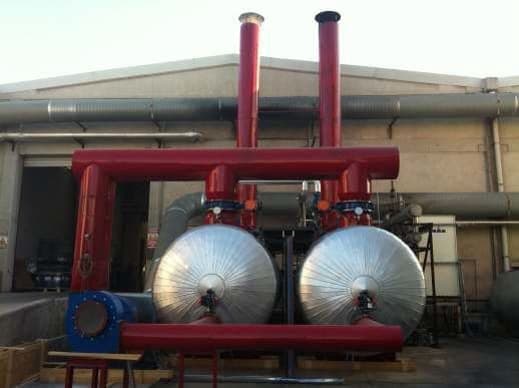
VE-GE Bant – Toluene Recovery Plant
- Sector
- Adhesive tape
- Solvent
- Toluene
- System
- V.O.C. solvent recovery plant
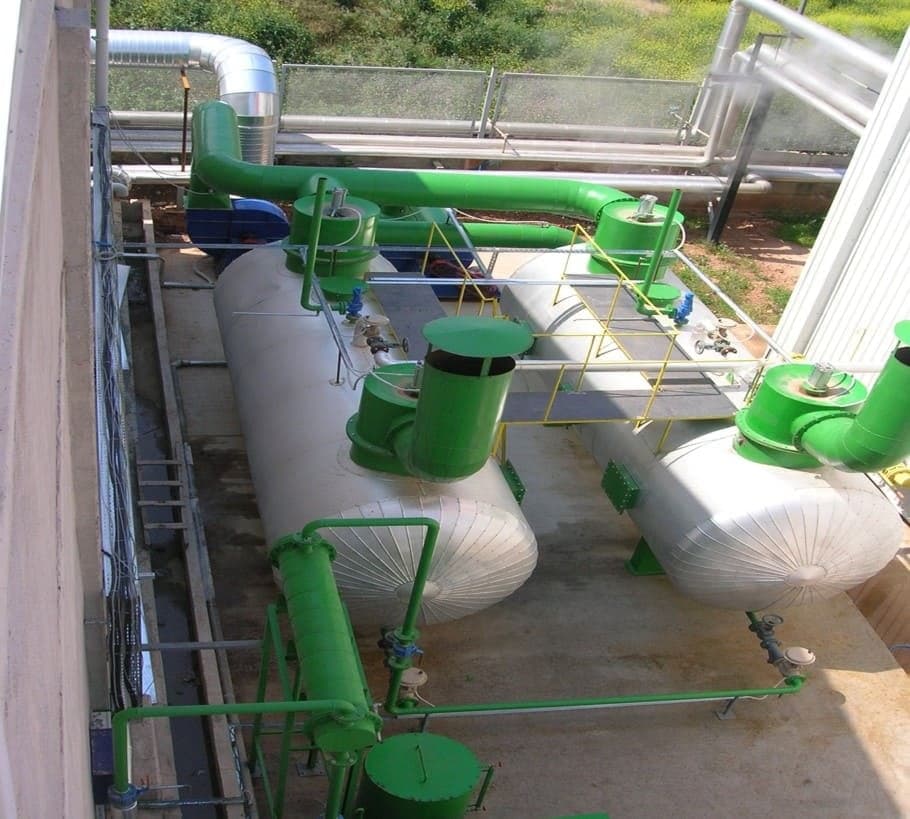
VE-GE Bant – Hexane Recovery Plant
- Sector
- Adhesive tape
- Solvent
- Hexane
- System
- V.O.C. solvent recovery plant
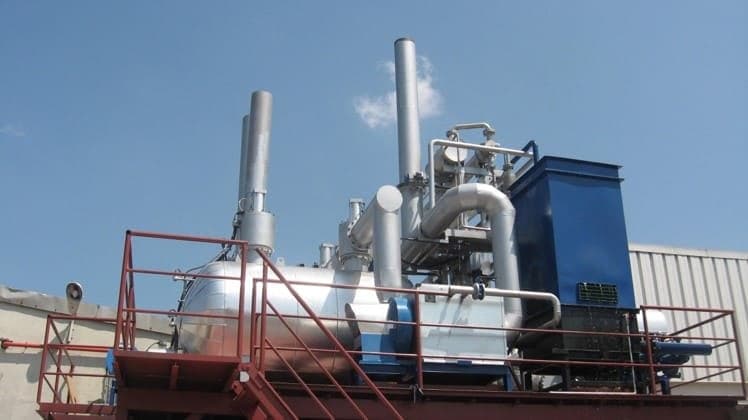
Nuga Bant – Toluene Recovery Plant
- Sector
- Adhesive tape
- Solvent
- Toluene
- System
- V.O.C. solvent recovery plant
Frequently asked questions
Frequently asked questions
Can toluene be recovered with activated carbon?
Yes. Toluene is a solvent that activated carbon holds well, and because it does not mix with water it separates easily from water in a decanter after regeneration. The recovery line is therefore simpler than for water-miscible solvents.
Can recovered toluene be reused in adhesive production?
Toluene separated from water in the decanter is taken into the storage tank and reused in the adhesive preparation area. The purity and water content your recipe requires are determined at the design stage; an additional purification step is added to the line if needed.
Can toluene and hexane be recovered in the same plant?
Yes. The same adsorption plant can capture both solvents. If the mixture has to be separated into its components, a distillation column is added to the plant.
How much space does a toluene recovery plant take?
Space requirement depends on the exhaust flow and the solvent load. Modular packaged units are designed for plants with limited space, site- or roof-mounted plants for high flows. The layout is decided during the survey.
Sources and method
What the information on this page rests on
This page was prepared by Yeşil Çevre Makine using the company’s product catalogue, photographs from its site installations and the public sources listed below. Information that is a company statement is marked as such in the text. Project-specific values (capacity, emission, recovered quantity) are determined for each plant at the survey and design stage.
Technical reference data
Public data sources used for solvent properties.
- D-01NIOSH Pocket Guide to Chemical Hazards: TolueneABD Hastalık Kontrol ve Korunma Merkezleri (CDC), NIOSH · Son gözden geçirme 30 Ekim 2019 · Accessed: 18 Eylül 2026
- D-03NIOSH Pocket Guide to Chemical Hazards: n-HexaneCDC, NIOSH · Son gözden geçirme 30 Ekim 2019 · Accessed: 18 Eylül 2026
Company statements and documents
Statements resting on these sources are Yeşil Çevre Makine’s own; they have not been verified by an independent body.
- C-01V.O.C. Solvent Geri Kazanım Tesisleri kataloğu (Türkçe)Yeşil Çevre Makine · 2022 · Accessed: 18 Eylül 2026 · Şirket belgesi
Request a site survey and pre-feasibility for your line
Tell us the solvent, the approximate consumption and the line. Our engineers call you to clarify the need and, where useful, plan on-site measurements.
What we ask for
- Solvent type
- Consumption or air flow
- Sector and line type
- Project stage
To reach us directly: +90 506 839 88 57 · info@yesilcevmak.com